Service
Off-Track Garage Doors in Federal Way: What's Happening and What It Costs
Off-track garage doors are common in Federal Way's older housing stock. Here's what causes it, what it costs to fix, and what we carry to fix it right the first time.
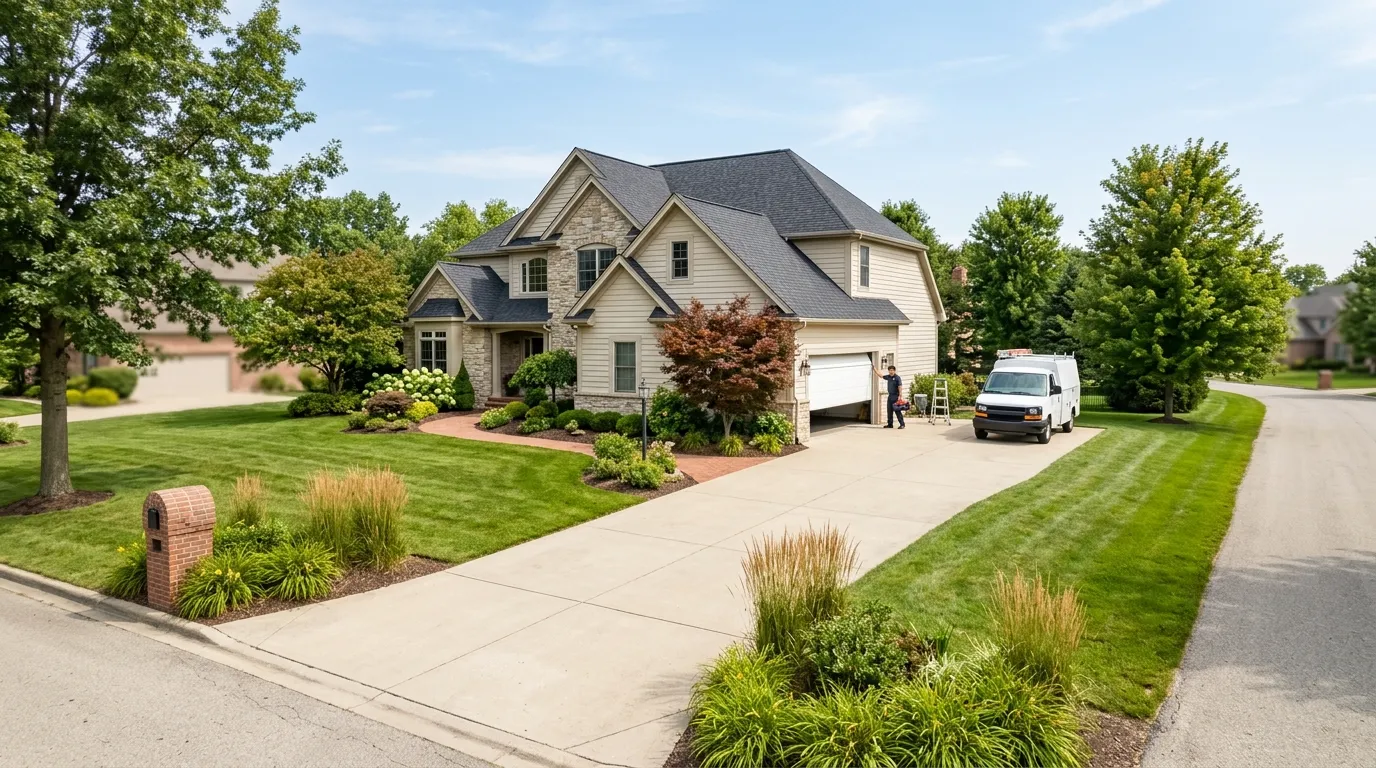
What Happens When You Call
-
1
Call or Request a Quote
Tell us what the door is doing and roughly how old the house is - that alone points us toward the likely part before a truck leaves.
-
2
On-Site Diagnosis
A tech checks the spring, cables, tracks, and opener in person and tells you plainly what is actually wrong.
-
3
Straight Price, No Surprises
You get a number before any work starts. It covers parts and labor, nothing added after the fact.
-
4
Fixed the Same Visit
Most repairs are done in one trip. If a part needs sourcing, we tell you that upfront instead of guessing.
How It Shows Up
You notice it before you understand it. The door hangs crooked at one corner, or it stalls halfway up with a grinding sound instead of the usual roll.
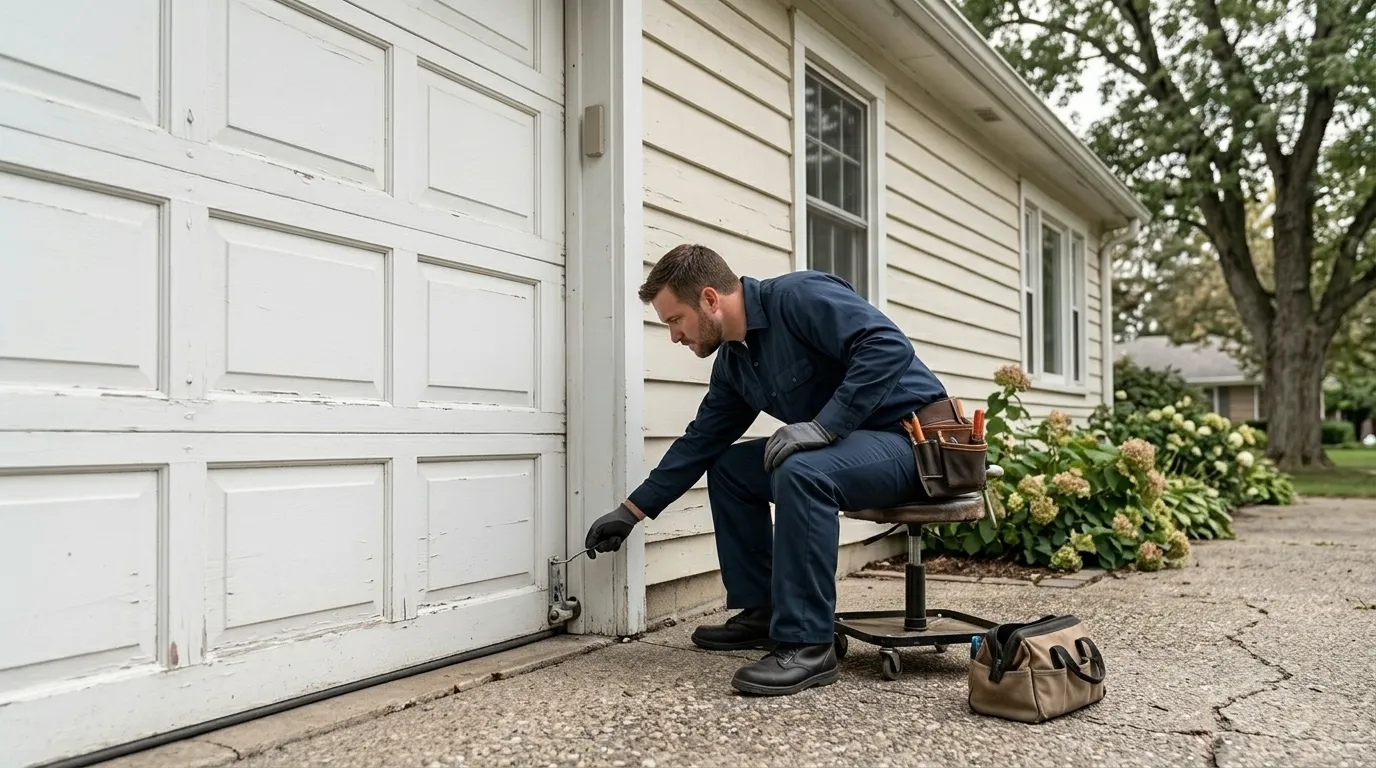
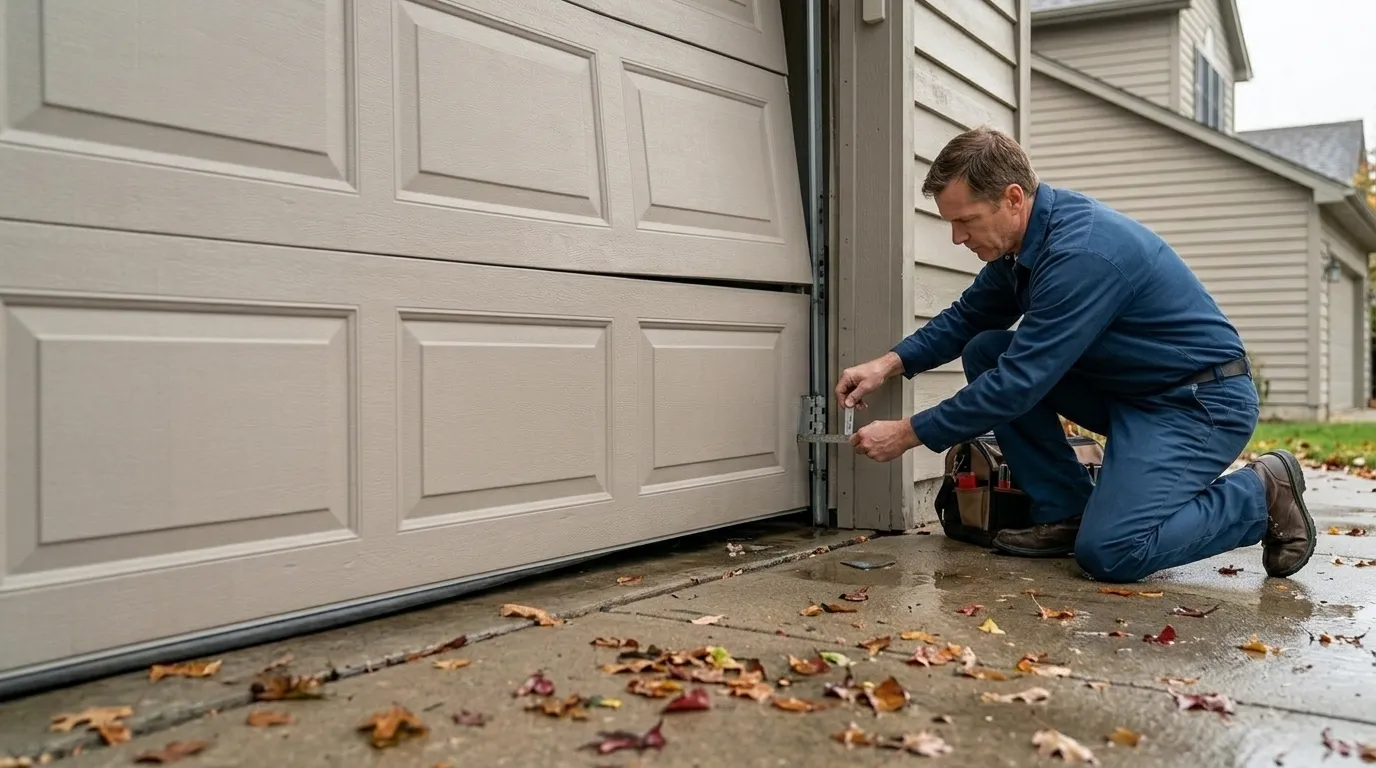
Sometimes a roller has popped clean out of the track and is sitting on the concrete. Sometimes the track itself has pulled away from the wall bracket and you can see daylight behind it.
Most homes in the Federal Way service area went up between 1938 and 2003, with the typical house dating to 1984. A door built or replaced in that window is usually running on steel track hung with lag bolts into jamb studs that have had thirty-plus years to loosen, shift, or rot slightly at the base. Add a slammed door, a car bumper tap, or just years of the opener yanking on a bent track, and the rollers walk out of the channel.
It's rarely one dramatic event. It's usually the last straw on a track that's been drifting out of square for a while.
A door that's off track on one side only is a different job than a door that's dropped fully off both tracks and is wedged in the opening. The first is often a same-visit fix. The second sometimes means the door itself, or a panel, took damage on the way down.
What You Pay
We don't publish a flat number here because the honest range depends on what's actually wrong once we're looking at it, not what it sounds like on the phone. A door that popped one roller and needs the track re-hung is a different bill than a door where the track is bent, a hinge is torn loose, or a panel cracked against the frame on the way down.
What we can tell you: across a service area of 316,256 households, with 159,518 of those owner-occupied, we see a wide spread of ages and door types, and pricing follows the job, not the zip code. A straight-forward re-track and roller swap costs less than a job where we're also replacing bent track sections or a hinge assembly. If the door came off because a spring failed at the same time, that's a separate repair stacked on top, and we'll tell you that up front rather than quote low and pad the invoice later.
The one thing we won't do is guess a number before we've seen the track, the rollers, and the hinges in person. A phone estimate on an off-track door is a guess dressed up as a quote, and we don't do that.
What Is on the Truck
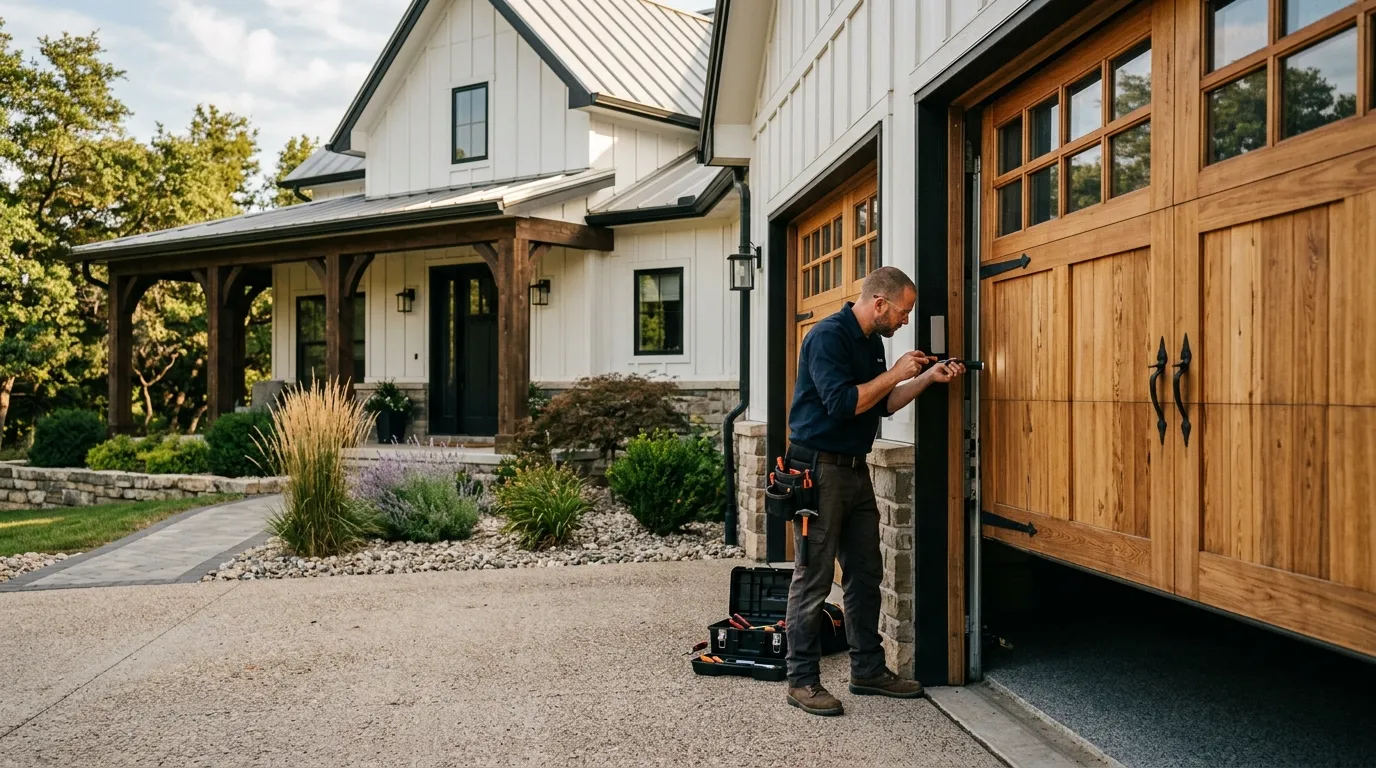
For an off-track call we carry standard steel track sections in the common widths, replacement rollers in both nylon and steel, hinges, end bearing plates, and the lag hardware to re-anchor a track bracket into a jamb that's loosened over the years. Most of the housing stock here is 1980s and 90s construction, which means door and track hardware from that era is common enough that we stock for it rather than special-order it.
What we don't carry on every truck is a replacement door panel matched to a specific older color or panel style - those sometimes have to be ordered, and that's the honest limitation here. If your door took a hit hard enough to crack or bow a panel, we can usually get the track and rollers fixed same visit, but a cosmetic panel match on an older door can mean a return trip once the part's in.
We also carry torsion and extension spring stock, since a spring that's failing is sometimes the reason a door came off track in the first place - the cable goes slack, the door racks sideways, and a roller jumps the channel.
Why It Happens Here
Federal Way sits in a cold-moderate climate band, and that matters more for this failure than people expect. It's not deep freeze, but it's enough seasonal swing - cold, wet winters into warmer, drier summers - that steel track expands and contracts against its wall brackets year after year. Combined with wood jambs that flex slightly with moisture, the fasteners holding track to the house work themselves loose gradually, not all at once.
That slow loosening matters more here because so much of the housing stock is old enough to have gone through thirty or more of those seasonal cycles. A house built in 1984, the rough median for this area, has had three decades of track brackets breathing with the weather before anyone notices the door running rough. Newer construction with better-anchored track and tighter jamb tolerances doesn't show this pattern nearly as often.
We see this across the wider service area, not just one neighborhood - the pattern holds wherever the housing dates to that same general era. It's a maintenance issue hiding as a sudden breakdown: nothing failed today, thirty winters did.
Talk to a Technician Before You Book
Describe what the door is doing and get a straight answer on what it likely needs.
Jobs Like Yours
Recent work from this service line.
Why Federal Way Calls Us
Frequently Asked Questions
Can I fix a garage door off its track myself?
If it's one roller out of the channel and the door is still sitting level, some homeowners manage it with the door manually supported and the opener disconnected. If the door is racked, sagging, or the track is visibly bent, don't force it back - a door under spring tension that shifts wrong can drop fast. That's when it's a call, not a DIY afternoon.
Is an off-track door always a spring problem too?
Not always, but often enough that we check both. A failing spring lets the cable go slack, which lets the door rack sideways and jump the roller off the track. If your door came off track and also feels heavy or uneven when you lift it by hand, the spring is probably part of the story.
Why does this seem to happen more in winter here?
Federal Way's cold-moderate climate means real seasonal swings between wet winters and drier summers. That cycle works fasteners loose in the wall jamb over years, and track brackets that have loosened tend to finally let go during the colder, wetter stretch when wood swells and steel contracts.
Need Off-Track Garage Doors in Federal Way: What's Happening and What It Costs?
Call now for straight answers on cost and timing.