Service
Garage Door Panel Replacement for Federal Way Homes
Panel replacement for Federal Way homes built 1938-2003, matched to original door width and track hardware, priced by panel count and material.
What Happens When You Call
-
1
Call or Request a Quote
Tell us what the door is doing and roughly how old the house is - that alone points us toward the likely part before a truck leaves.
-
2
On-Site Diagnosis
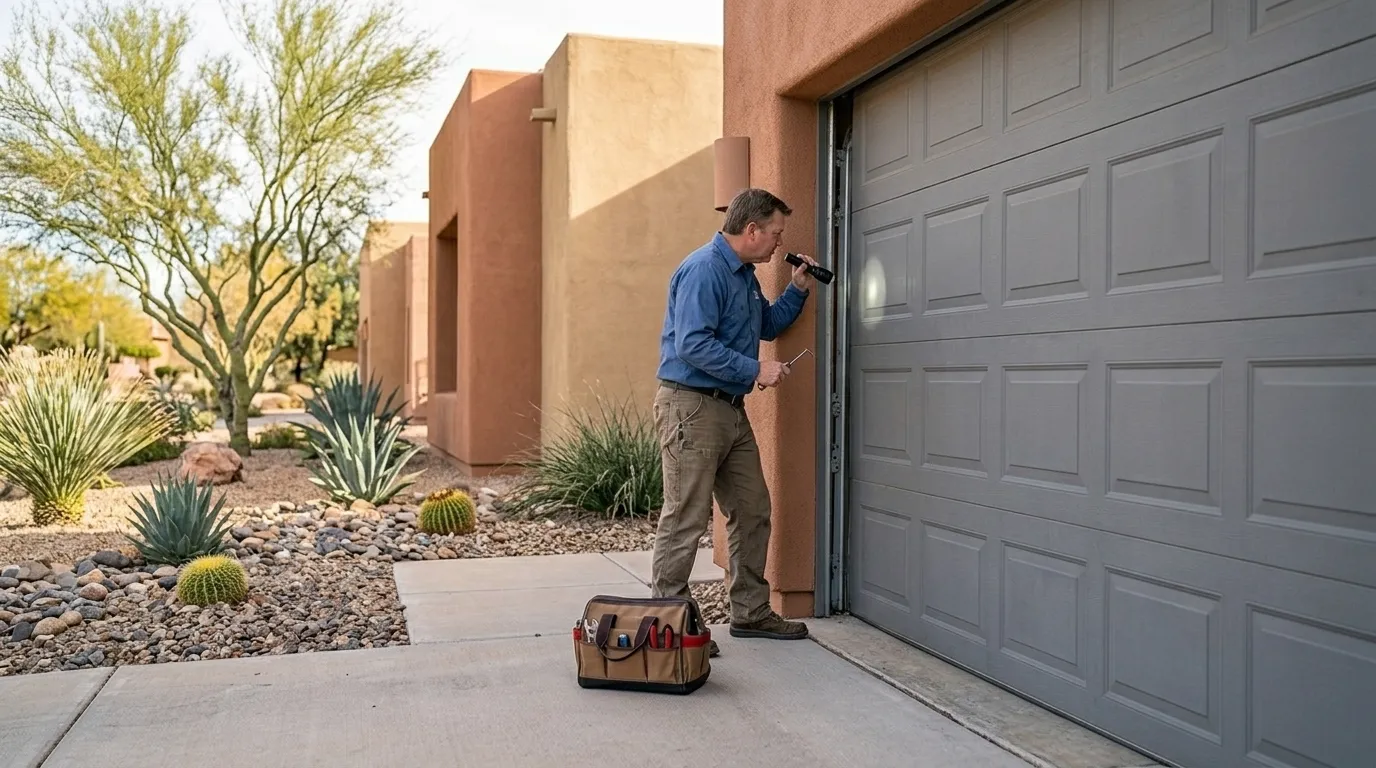
A tech checks the spring, cables, tracks, and opener in person and tells you plainly what is actually wrong.
-
3
Straight Price, No Surprises
You get a number before any work starts. It covers parts and labor, nothing added after the fact.
-
4
Fixed the Same Visit
Most repairs are done in one trip. If a part needs sourcing, we tell you that upfront instead of guessing.
How It Shows Up
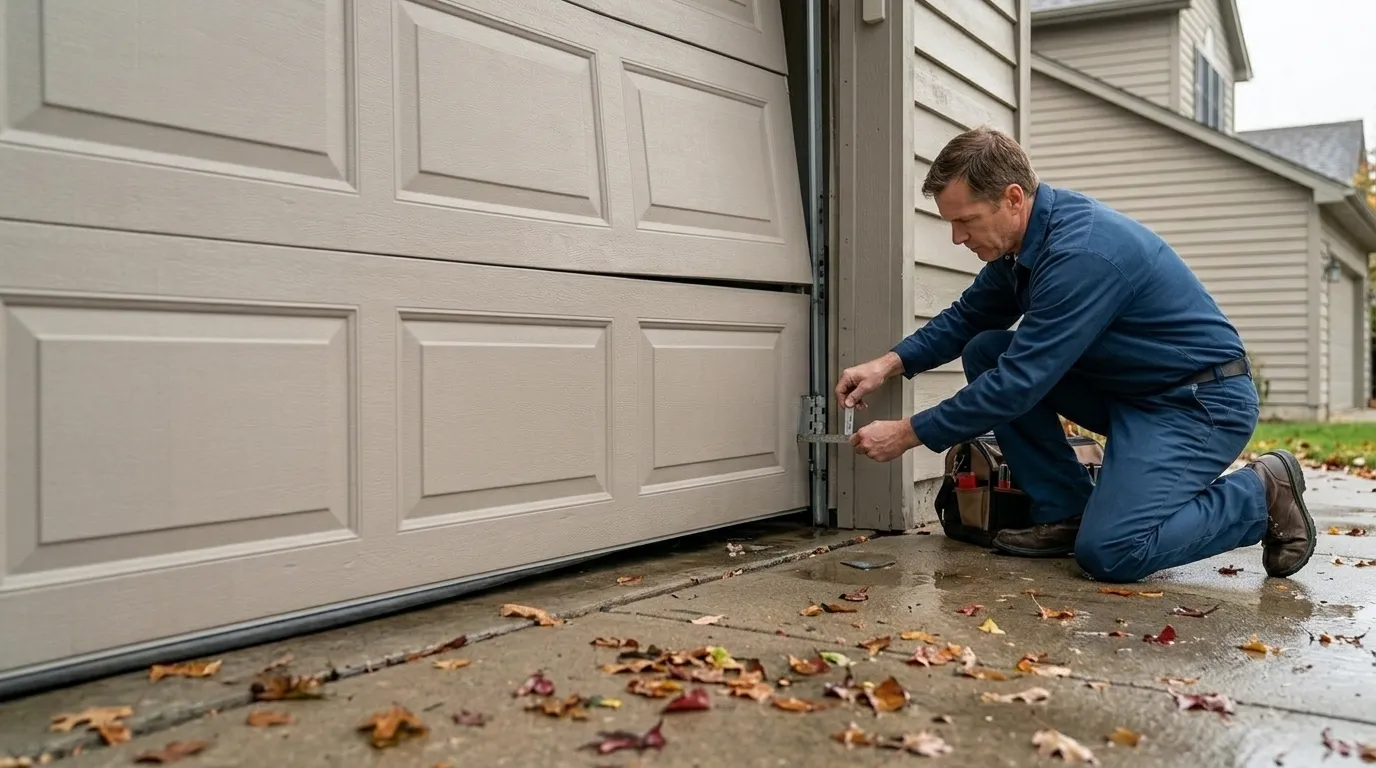
A panel usually fails one of two ways here. Either a car or a trash can bumper clips the bottom section and it bows or splits, or years of standing water at the slab edge rust out a steel panel from the inside where you can't see it until it buckles. Because most Federal Way houses were built between 1938 and 2003, with the bulk of the stock going up in the 1980s and 90s, you're often dealing with a door that's 25 to 40 years old.
That means the panel that got hit isn't a current model - it's a discontinued profile, and the fix isn't just "swap in a new panel," it's finding one that matches the groove pattern, the seam spacing, and the color of the panels next to it. On a lot of these older doors only one or two manufacturers still stock a compatible section, and sometimes none do. We check that before we quote anything, because a mismatched panel on an otherwise good door looks worse than the dent did.
If your door is a single flat sheet with no seams, that's a different repair conversation entirely - some of those just aren't panel-replaceable and the honest answer is a new door, not a patch.
What You Pay
We don't post a flat number for panel replacement because the range is wide and driven by things we can only confirm on site: how many panels are damaged, whether the door is steel or wood, whether it's insulated, and whether the manufacturer still makes a matching section or we're sourcing an off-brand substitute. A single bottom panel on a plain steel door is a different job than replacing two panels on an insulated wood-look door where the finish has to blend.
What we can tell you is that panel replacement almost always costs less than a full door swap when the track, springs, and opener are still sound - that's the whole reason to consider it. We'll tell you on the walk-through if the door's age or the panel availability tips the math toward full replacement instead, and we'd rather say that up front than sell you a patch that won't hold.
What Is on the Truck
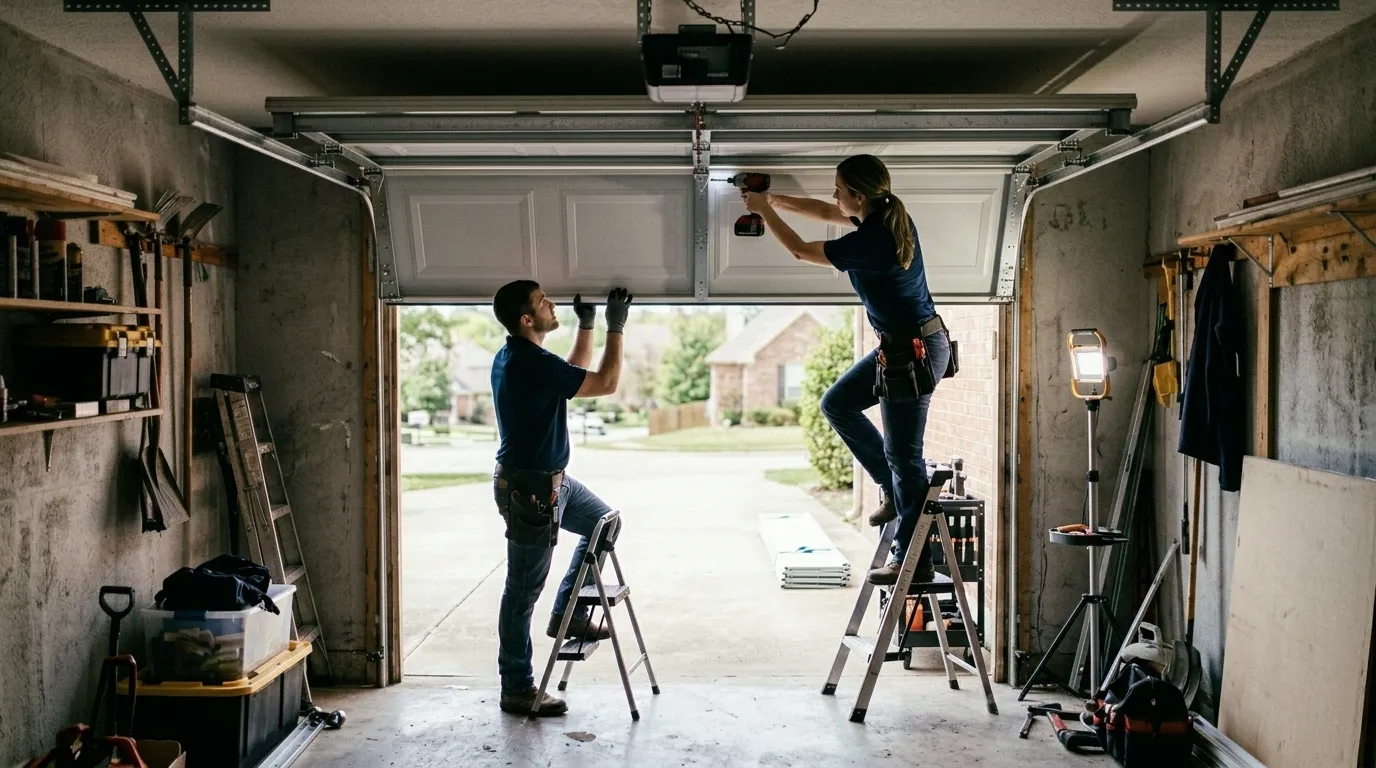
For panel work we carry common steel panel sections in the widths that show up most across this area's housing stock, plus the hardware that actually fails alongside a cracked panel - end stiles, hinges, and the fasteners that strip out when a panel has been flexing loose for months before anyone calls. What we don't carry stock for is wood panels and older discontinued embossed steel profiles; those get special-ordered once we've matched the pattern, and that's the one honest wait built into this job - it's not same-day. We also carry the tools to true up a track that's gotten bent from the same impact that took out the panel, since replacing the panel and leaving a bowed track just means a second failure down the road.
Why It Happens Here
This part of Washington sits in a cold-moderate climate band, not the deep-freeze or high-heat extremes that stress a door skin directly, so panels here don't typically fail from thermal expansion the way they might elsewhere. What they fail from is moisture cycling on older steel that was never galvanized to today's standard, combined with the sheer age of the stock - a door installed when a house was built in, say, 1984 (the median year for this area) has had four decades of seasonal damp to work rust into any spot where the paint chipped.
Add in daily impact risk from tighter driveways and garages doing double duty as storage, and the bottom two panels on an original 1980s or 90s door are the ones that give out first. It's a wear pattern, not a defect, and it's specific to how long these doors have been standing and what they've been standing in.
Talk to a Technician Before You Book
Describe what the door is doing and get a straight answer on what it likely needs.
Jobs Like Yours
Recent work from this service line.
Why Federal Way Calls Us
Frequently Asked Questions
Can you replace just the bottom panel instead of the whole door?
Usually, yes, if the rest of the door and its track are in good shape and we can find a matching panel. Bottom panels take the most impact and rust damage, so they're the most common single-panel replacement. We check panel availability for your door's make and age before quoting, since older discontinued profiles sometimes can't be matched.
Will a new panel match the color of my old door?
Close, but not guaranteed exact. Factory paint fades over the years the original panels have been in the sun, so a brand-new panel next to a 20-year-old one may show a slight shade difference at first. It usually evens out with a season of weathering, but we'll point it out before we install so it's not a surprise.
Is panel replacement always cheaper than a new door?
Often, but not always. If your door needs two or more panels replaced, or the manufacturer no longer makes a matching profile and we're custom-sourcing, the labor and part cost can approach what a new door runs. We'll give you both numbers on the walk-through so you can compare instead of guessing.
Need Garage Door Panel Replacement for Federal Way Homes?
Call now for straight answers on cost and timing.