
Federal Way Garage Door Guide
What Your Garage Door Is Trying to Tell You
Federal Way homes built 1938-2003 carry original hardware that talks before it fails. Here's what each sound means and why the cold moderate climate speeds up the wear.
- Licensed & Insured
- Same-Area Service Calls
- Upfront Pricing
Where People Go Wrong
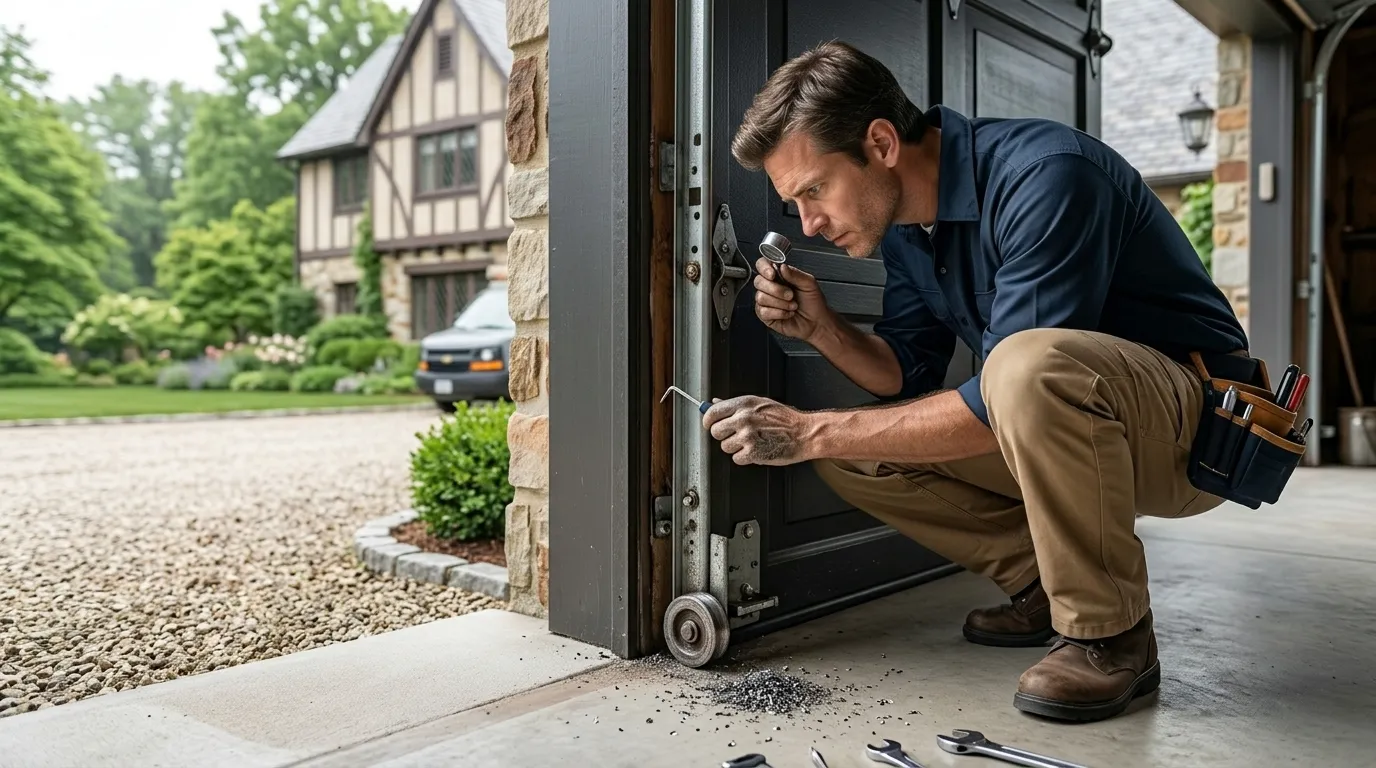
Most people wait for the door to stop working before they call anyone, but a garage door doesn't fail quietly. It tells you first. The mistake in Federal Way is assuming a new grind or a clunk is just "how the door sounds" because it's always sounded that way.
With housing stock here running from 1938 up through 2003, and most of it landing in that 1980s-90s band, a lot of doors are running hardware that's older than the owner realizes. A squeal that's been there for two years isn't normal, it's just been given two years to get worse.
The other common error is treating every noise the same way. A rhythmic thump once per rotation is a roller. A sharp bang followed by the door refusing to move is a spring, and that one's not a lubrication job, that's a stop-what-you're-doing call.
People spray the tracks with WD-40, the noise quiets down for a week, and they figure it's handled. It isn't. Lubricant masks a bearing or hinge that's metal-on-metal; it doesn't fix it.
On a torsion system installed the year the house was built, that quiet week is the sound of a part getting closer to done.
What You Pay
We don't have a price list to hand you here, and honestly, an accurate one depends on what's actually making the noise, not a flat rate for "garage door repair." A roller swap and a broken spring on a double door are not the same job, and quoting either one without seeing the door and its age would be a guess dressed up as a fact.
What we can tell you: the age of the hardware matters more than the age of the house. A door installed as part of a 1980s build that's never been touched is a different job than a door that's had one replacement already.
If your opener, springs, and track are all original to a house from that median-1984 stretch, expect the estimate to lean toward full-part replacement rather than a patch, simply because parts from that era are the ones nobody keeps in stock. That's the honest limitation here: we're not going to hunt down a 40-year-old bracket to save you money on a part that's going to fail again next winter anyway.
The Situation
Federal Way's housing runs 1938 to 2003, with the bulk of it in the 1980s and 90s, spread across the named areas in this part of King County. That range matters because garage door hardware from those two decades wasn't built the same way twice. Early torsion spring setups, extension springs with open coils, chain-drive openers wired straight into a wall switch - all of it still turns up on service calls in this area, sitting right next to houses with modern belt-drive units and safety sensors.
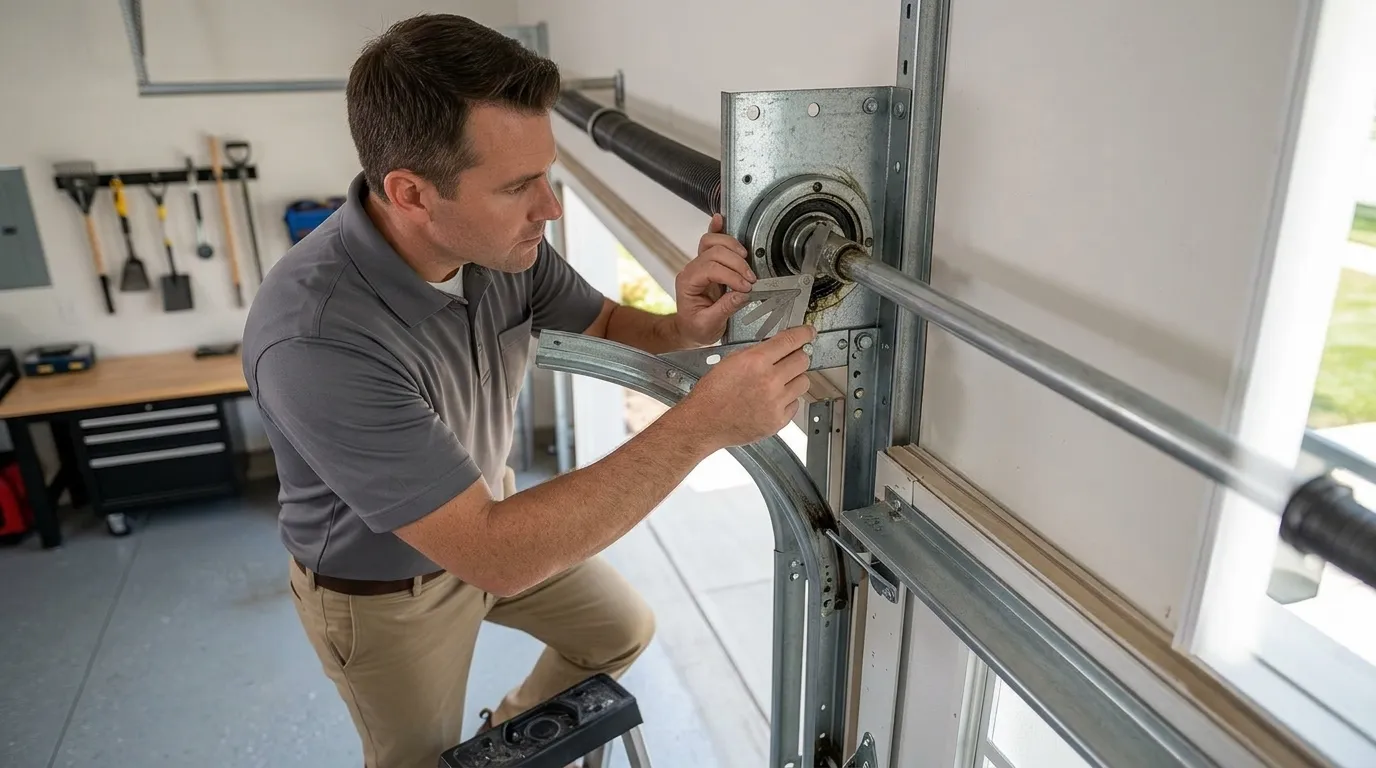
What this means for noise diagnosis: the same sound can point to different problems depending on which era's hardware is behind the panel. A grinding opener on a 1990s chain drive usually means the drive gear is worn plastic.
The same grinding on an older torsion setup is more likely a bearing plate that's outlived its lubrication. You can't diagnose by sound alone without knowing roughly what's back there, which is exactly why guessing off a generic checklist gets people the wrong part or the wrong repair the first time around.
What the Weather Here Does to It
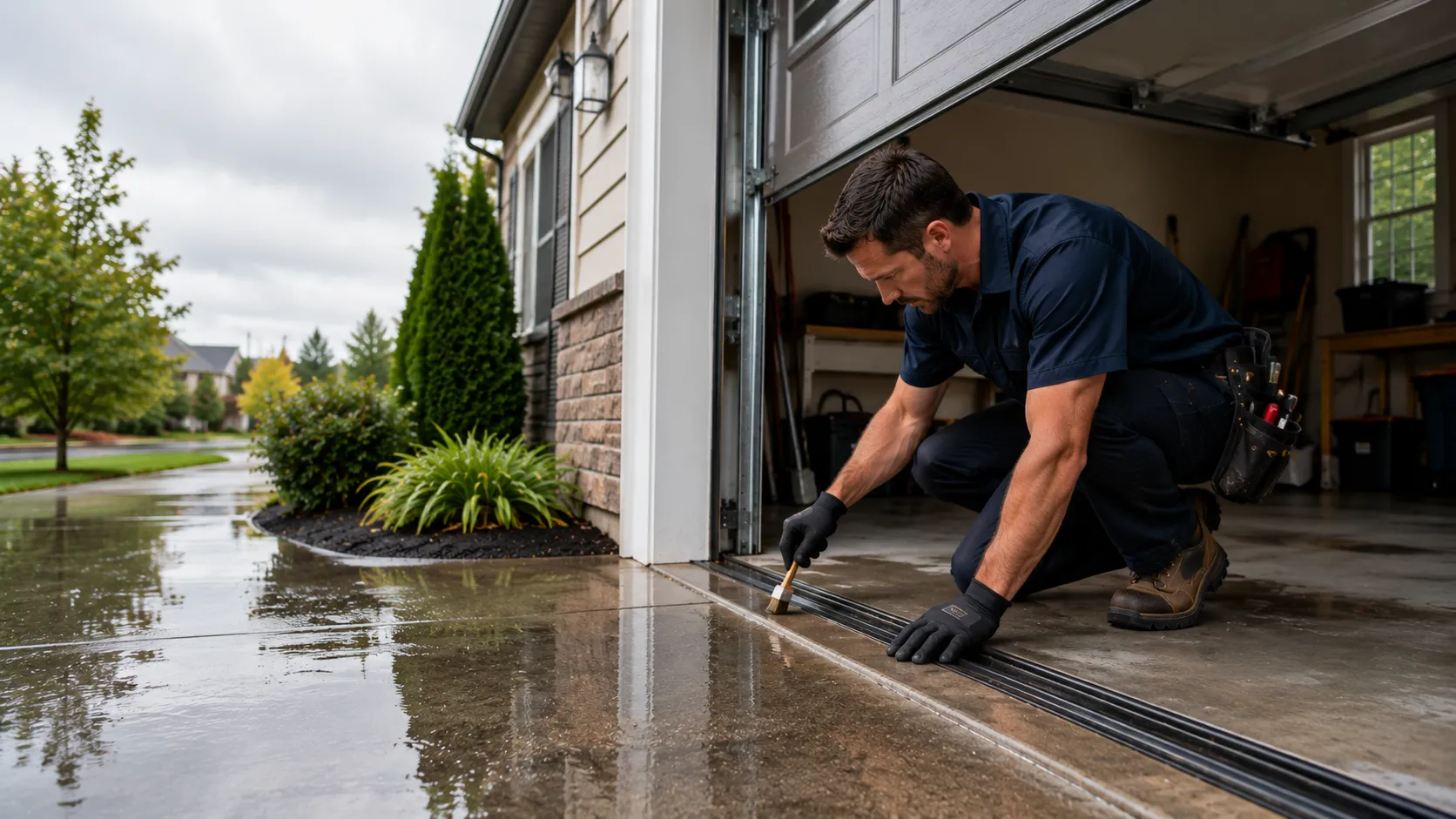
This area sits in a cold moderate climate band, not the deep freezes some inland spots get, but enough seasonal swing to work on metal and grease year after year. Steel springs and rollers contract in cold mornings and expand again by afternoon. That constant small movement is what turns a quiet bearing into a noisy one faster than it would in a climate that stays flat.
Grease is the other half of it. Standard lubricant thickens in cold and thins out again with humidity, which means a door that was silent in August can start groaning by December without anything mechanically breaking - the grease just isn't doing its job at that temperature anymore.
On the older end of the housing stock here, doors running original 1980s-era lube (or none, because it was never reapplied) are the ones most likely to announce a spring or bearing problem the first cold week of the year. If your door just started making noise with the season change, that's the climate finding the weak point, not creating a new one.
How We Can Help
Garage Door Repair
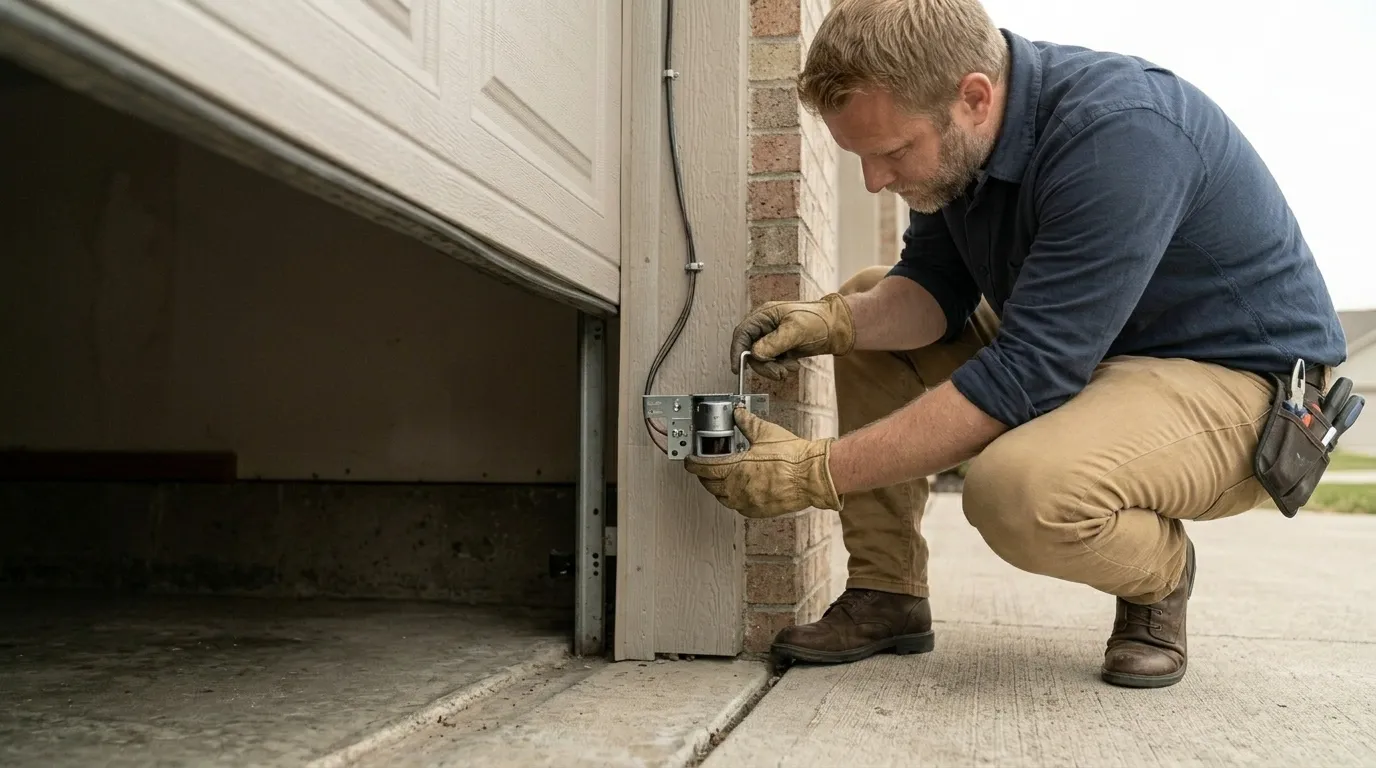
Springs, cables, tracks, rollers, and openers fixed by a tech who explains the problem before touching anything.
Learn more →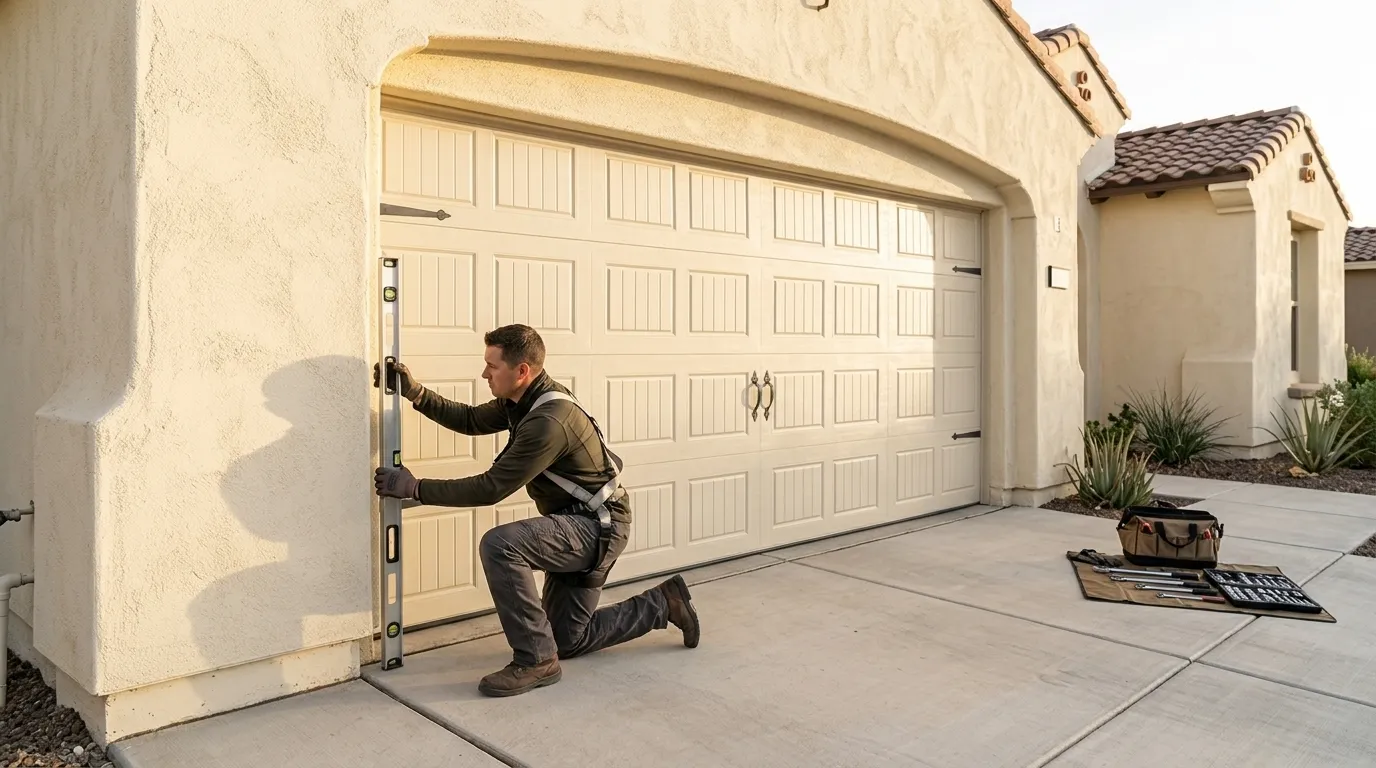
Garage Door Installation
New sectional doors sized and installed for the housing stock actually built in this area.
Learn more →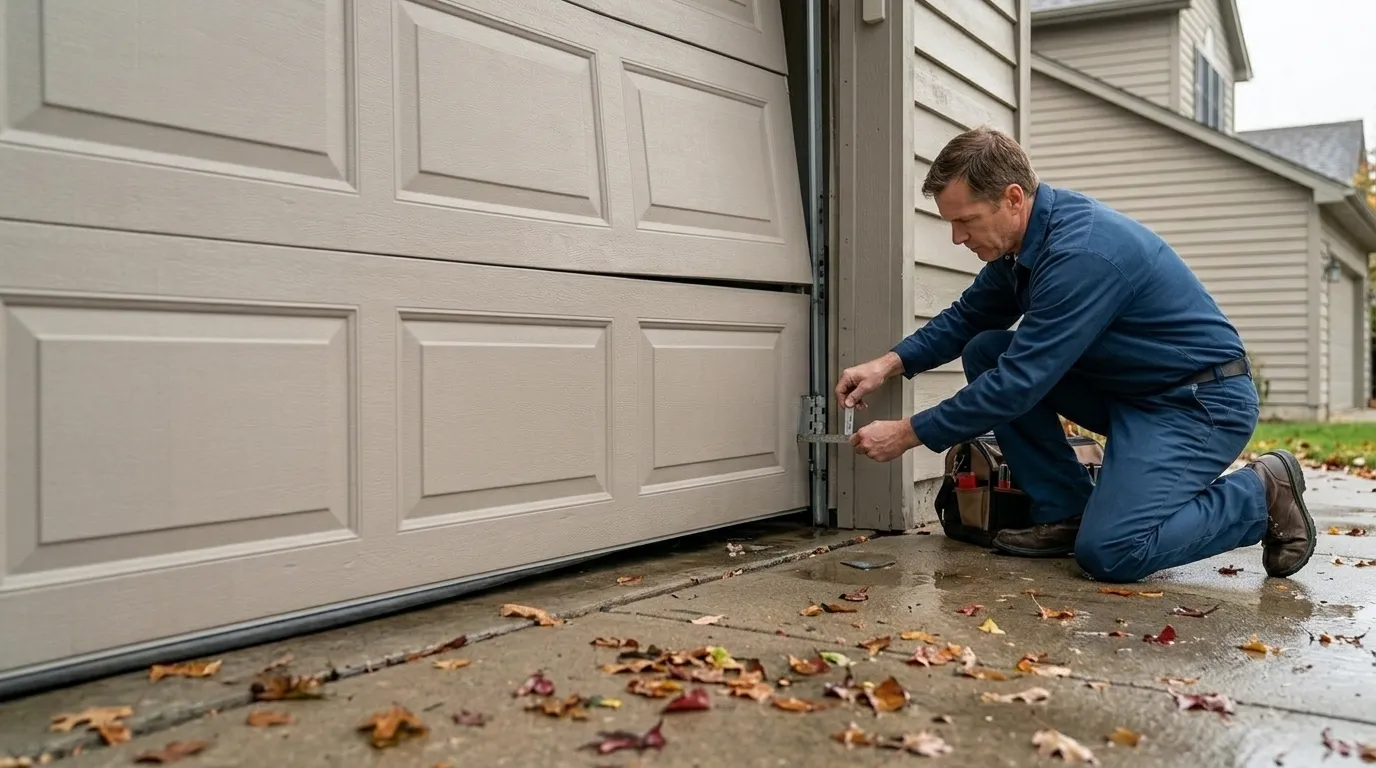
Garage Door Service
Tune-ups, lubrication, and safety checks that catch a small problem before it becomes a service call.
Learn more →Frequently Asked Questions
My garage door started squealing this week, is it urgent?
Depends on the sound. A steady squeal on rollers usually means lubrication and time, not an emergency. A sharp bang or a door that suddenly feels heavier to lift by hand is different - that's often a spring giving out, and it's worth a same-week call before it lets go the rest of the way.
Why does my door get noisier in winter?
Cold tightens metal parts and thickens grease, so bearings, rollers, and hinges that were quiet in warmer months start showing wear they'd been hiding. It's more common on older hardware, since original lubrication from decades back wasn't built for repeated seasonal swings.
My house was built in the 80s and the opener's original, is that a problem?
Not automatically, but original hardware from that era is the most likely to be the source of a new noise, since it's had the most years to wear down and often hasn't been serviced since it went in. Worth having it looked at rather than waiting for it to stop working.
Can I just keep spraying WD-40 on it?
WD-40 quiets a noise temporarily but it's a solvent, not a proper lubricant, and it can actually strip grease that's already there. If the same spot keeps needing spray every couple weeks, that's a part wearing out underneath, not a lubrication gap.
Have a Door That Needs a Second Opinion?
Call and describe what it is doing - we will tell you what it likely is.