
Federal Way Garage Door Guide
Why Your Garage Door Jumped the Track
Federal Way homes built between 1938 and 2003 carry track hardware that shifts with age and cold. Here's what actually knocks a door off track and what it costs to fix.
- Licensed & Insured
- Same-Area Service Calls
- Upfront Pricing
Where People Go Wrong
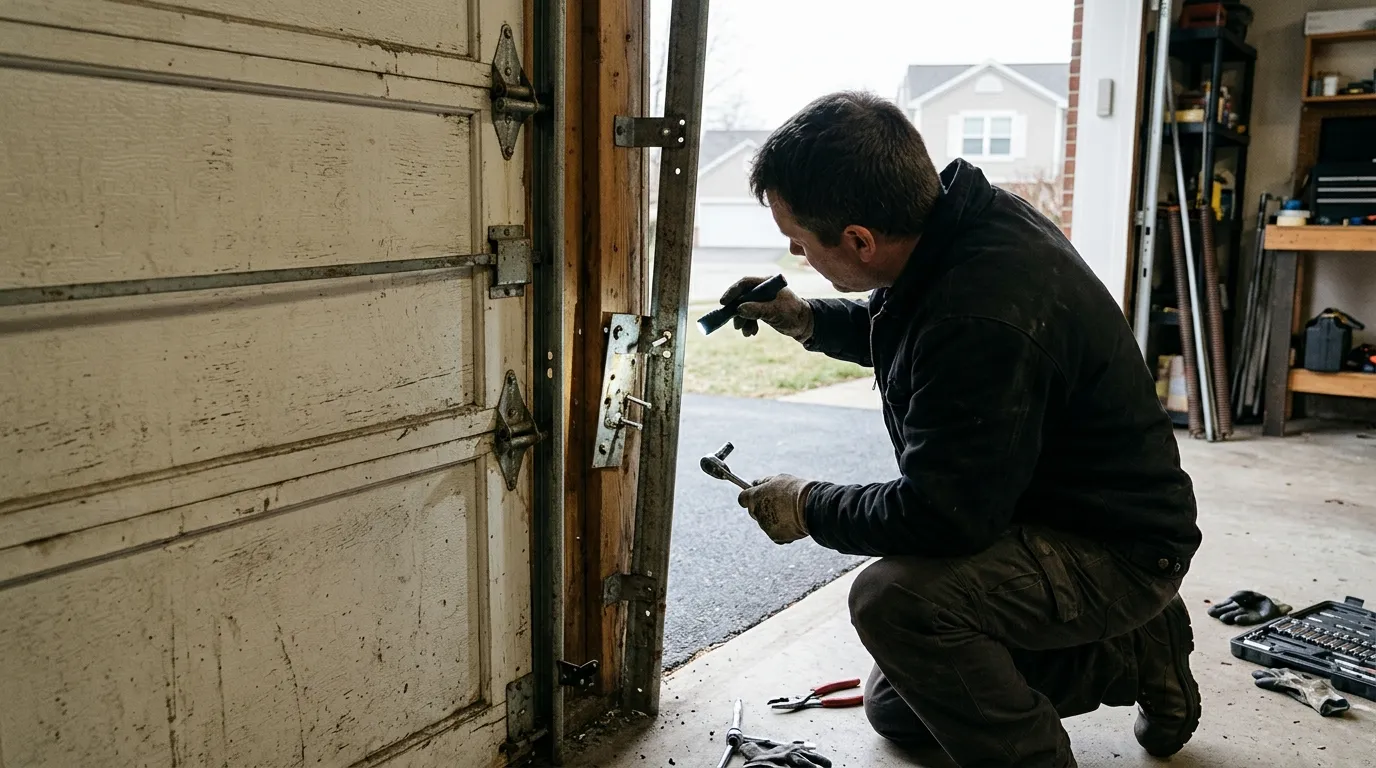
Most of the calls we get start the same way: someone notices the door is crooked, hears a scrape, or sees a roller sitting outside the track, and their first move is to force the door up or down by hand or with the opener. That's the move that turns a ten-minute track adjustment into a bent rail or a torn panel.
Housing in this area was mostly built between 1938 and 2003, with the bulk of it going up in the 1980s and 90s. That means a lot of doors here are still running original track brackets - the L-shaped ones lag-bolted straight into jamb studs, not the reinforced brackets you'd see on anything built after 2005. Those brackets loosen over decades of the door slamming shut, and a loose bracket lets the track flex sideways just enough for a roller to walk out of it on a bind.
The other common mistake is ignoring a door that's already binding intermittently. If it catches on one side going up, that's usually a bent track or a bracket pulling away from the frame - not something that fixes itself, and not something you should keep running through on the opener, because every cycle bends the rail a little more.
What You Pay
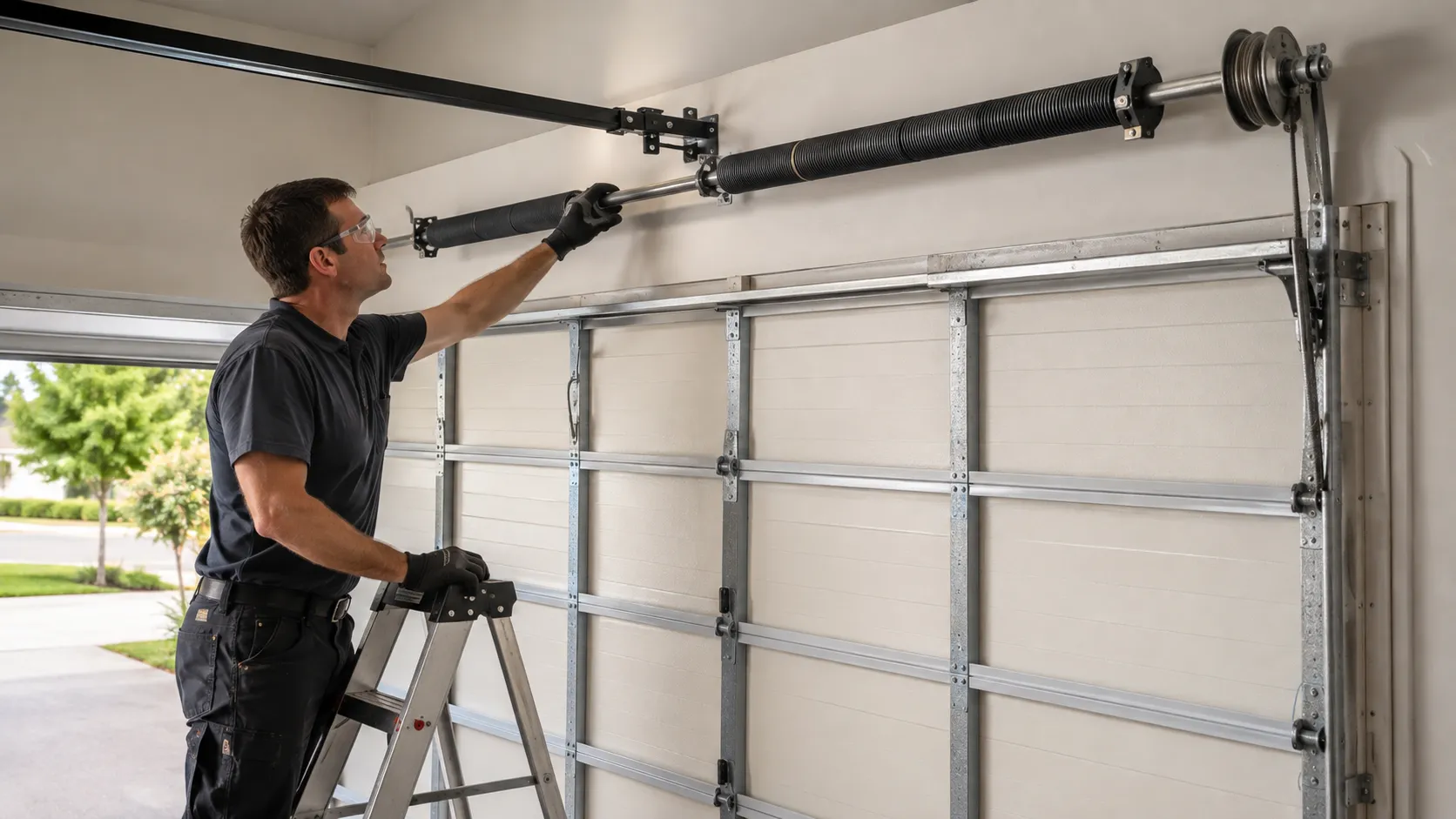
We don't have a flat number to put here, because the fix depends entirely on what's actually wrong - a bent section of track, a pulled bracket, or a roller that's cracked and needs replacing are three different jobs with three different price tags. What we can tell you is what drives the cost: whether the track itself is salvageable or needs a full section swapped, whether the door came off because of a bracket issue or because a cable let go and dropped the door crooked, and how many rollers are shot.
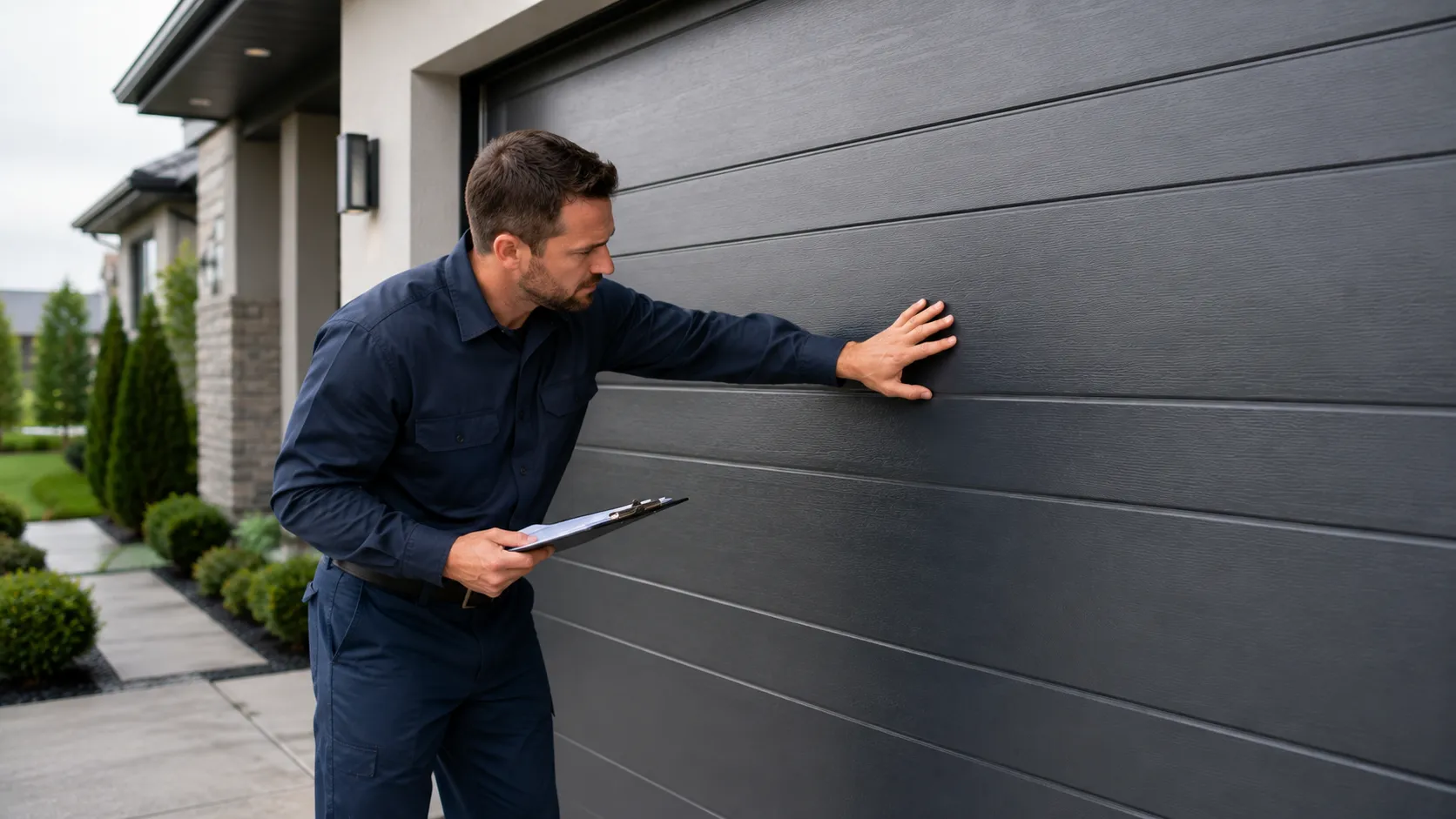
If your opener kept trying to run the door after it left the track, there's a decent chance you're also looking at a bent panel or a cracked stile, which changes the job from a track repair to a door repair. We'll tell you straight if replacement makes more sense than repair once we've seen it - sometimes patching a 1980s-era door that's already had two or three track incidents just delays the same call a year from now.
The Situation
With median housing age sitting around 1984 across this area, a large share of the doors we get called on have had thirty-plus years of thermal cycling on the same hardware. Brackets back out a sixteenth of an inch at a time.
Track bolts loosen. None of it looks like anything until the day a roller finally has enough clearance to pop free, usually on the last few inches of a close or open when the door is moving fastest and the rollers are under the most side load.
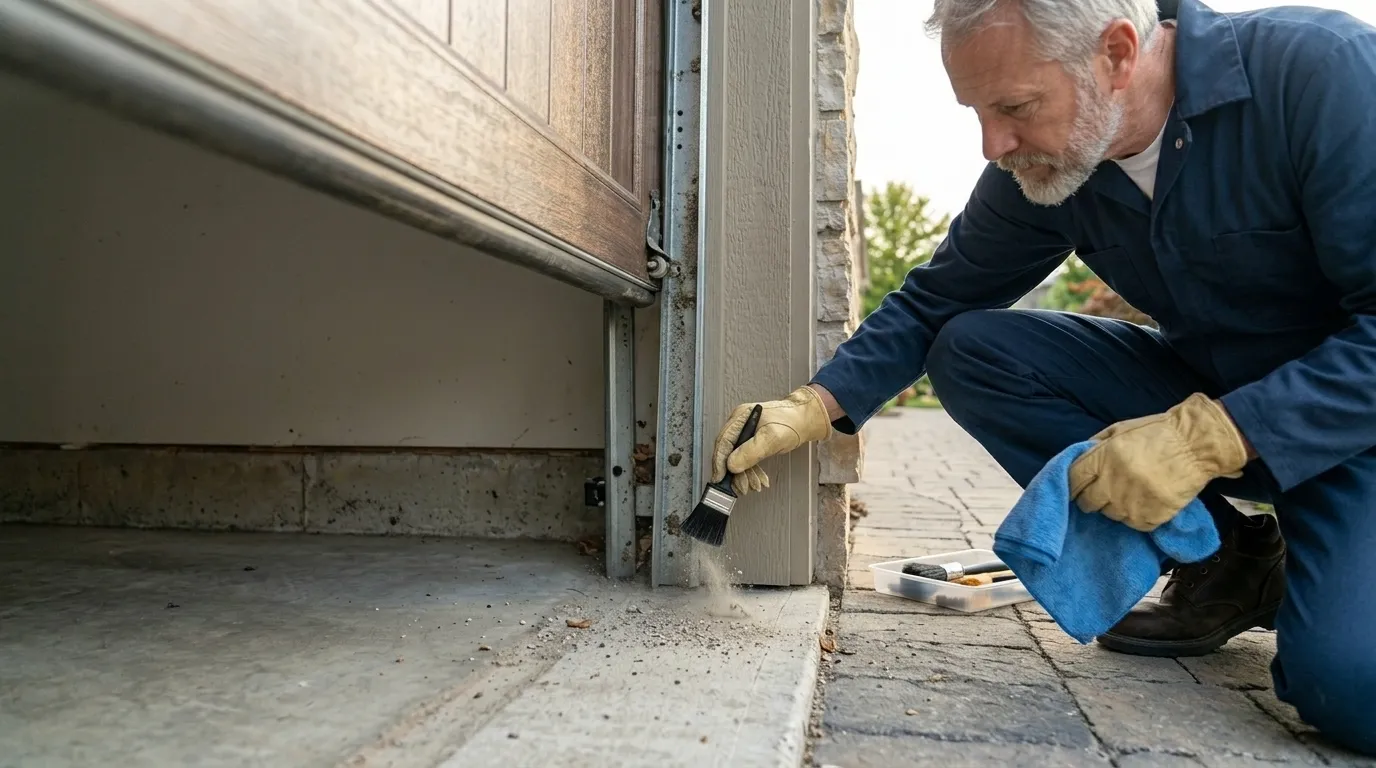
Double-wide doors get hit harder than single doors, because there's more door weight bearing on the same two vertical tracks, and more torque trying to twist the tracks apart if one side binds before the other. We see a good number of these in the older single-family stock spread through this area and into the neighboring pockets - Lakeland North, Milton, Federal Way's own older sections closer to the 1980s build-out. The pattern's consistent: original brackets, decades of cycling, and eventually a track that's just slightly out of parallel with the door.
What the Weather Here Does to It
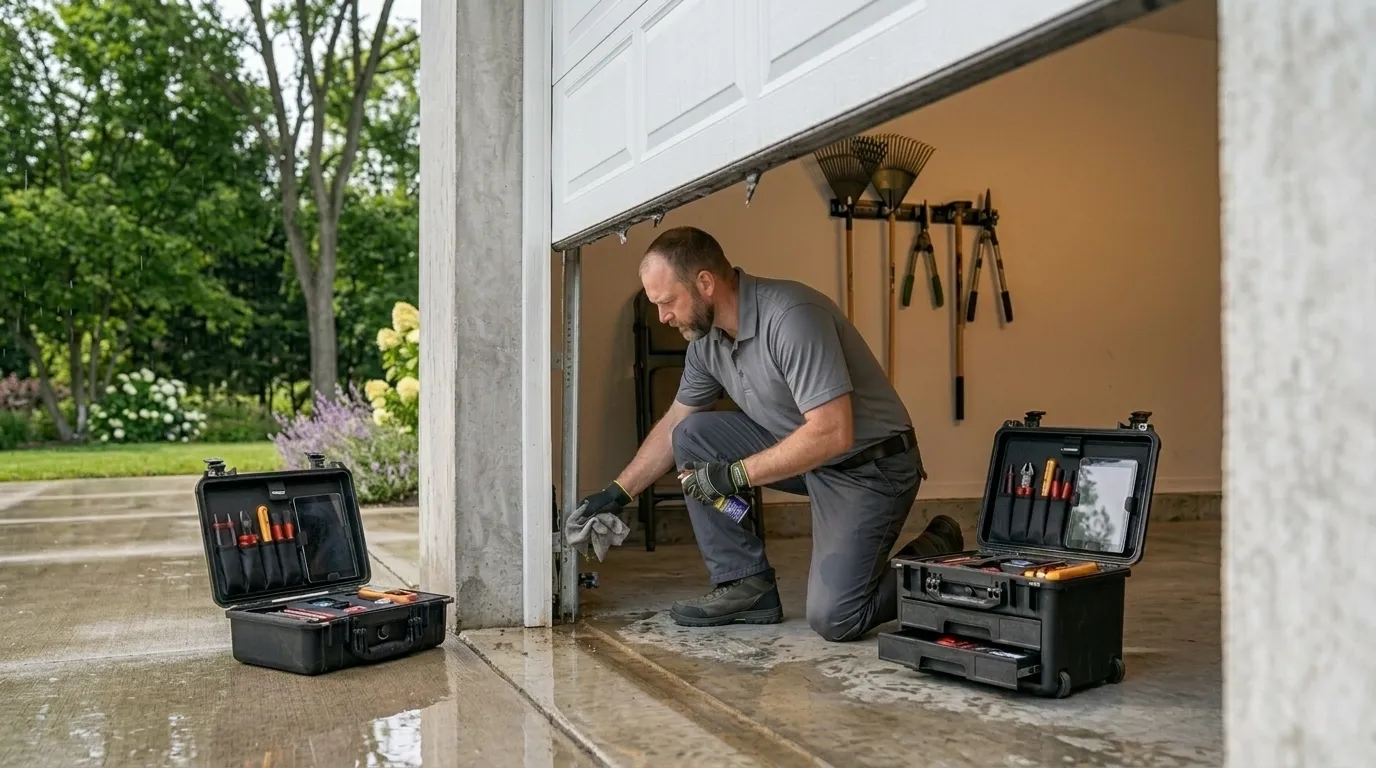
This area sits in a cold-moderate climate band, which doesn't mean brutal winters, but it does mean repeated freeze-thaw swings and a lot of damp, cold mornings where metal contracts and condensation sits on the track rail. That moisture works into the bolt holes on older brackets - the same original hardware common in houses built through the 1980s and 90s here - and it accelerates the loosening that would happen slowly anyway.
Cold also stiffens the nylon rollers that a lot of these older doors still run on, which means more resistance on a cold start, more strain on a bracket that's already a little loose, and a higher chance the door binds and pops a roller on the first cycle of the day. It's not dramatic weather.
It's just steady, and steady is what works hardware loose over enough winters. If your door only seems to jump track first thing in the morning, that's usually your answer.
How We Can Help
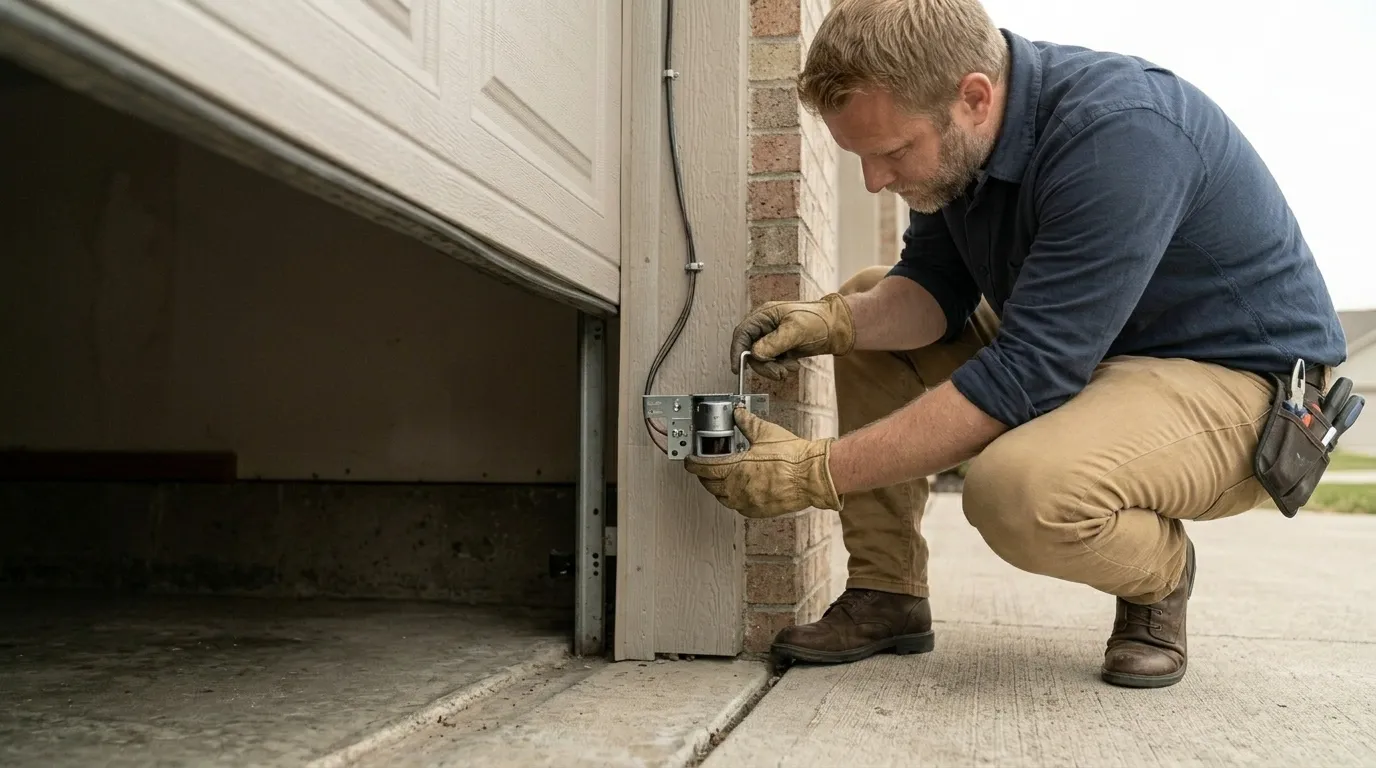
Garage Door Repair
Springs, cables, tracks, rollers, and openers fixed by a tech who explains the problem before touching anything.
Learn more →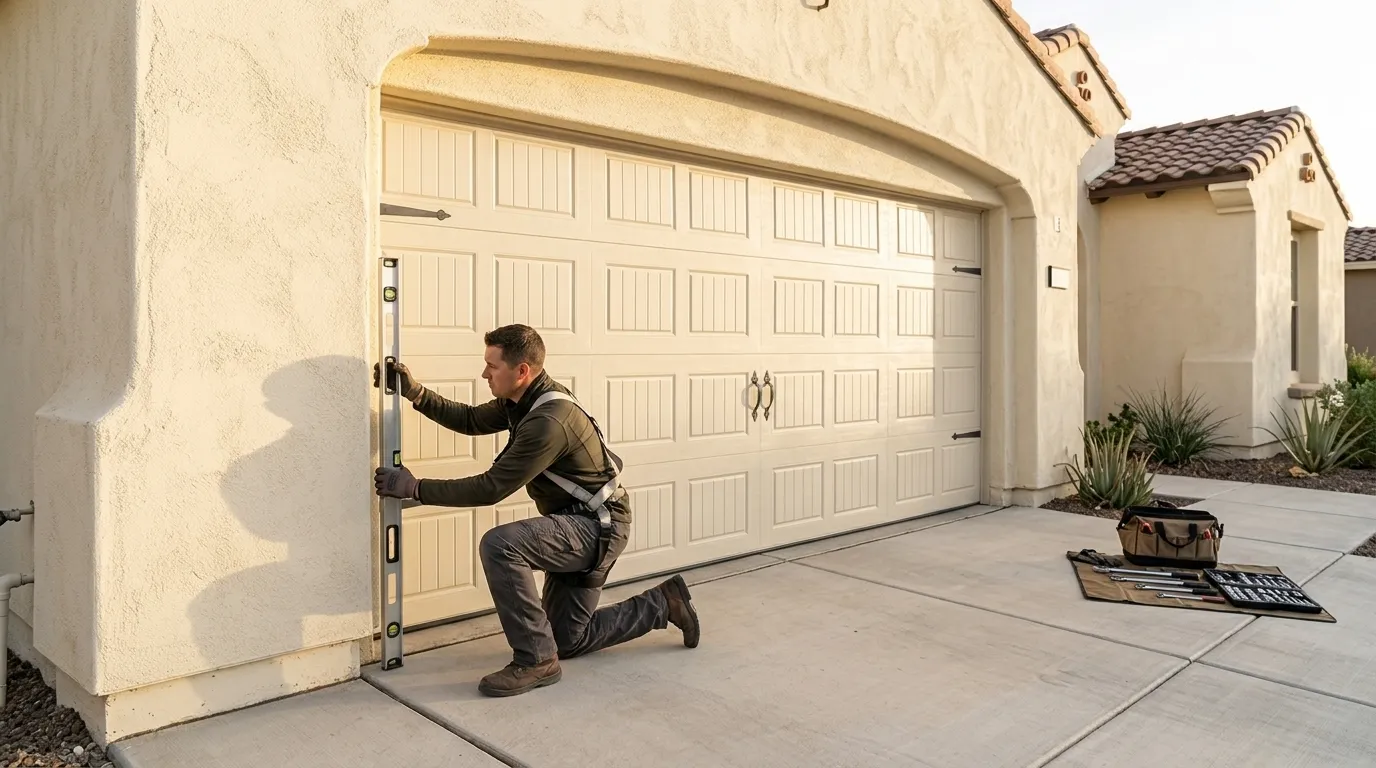
Garage Door Installation
New sectional doors sized and installed for the housing stock actually built in this area.
Learn more →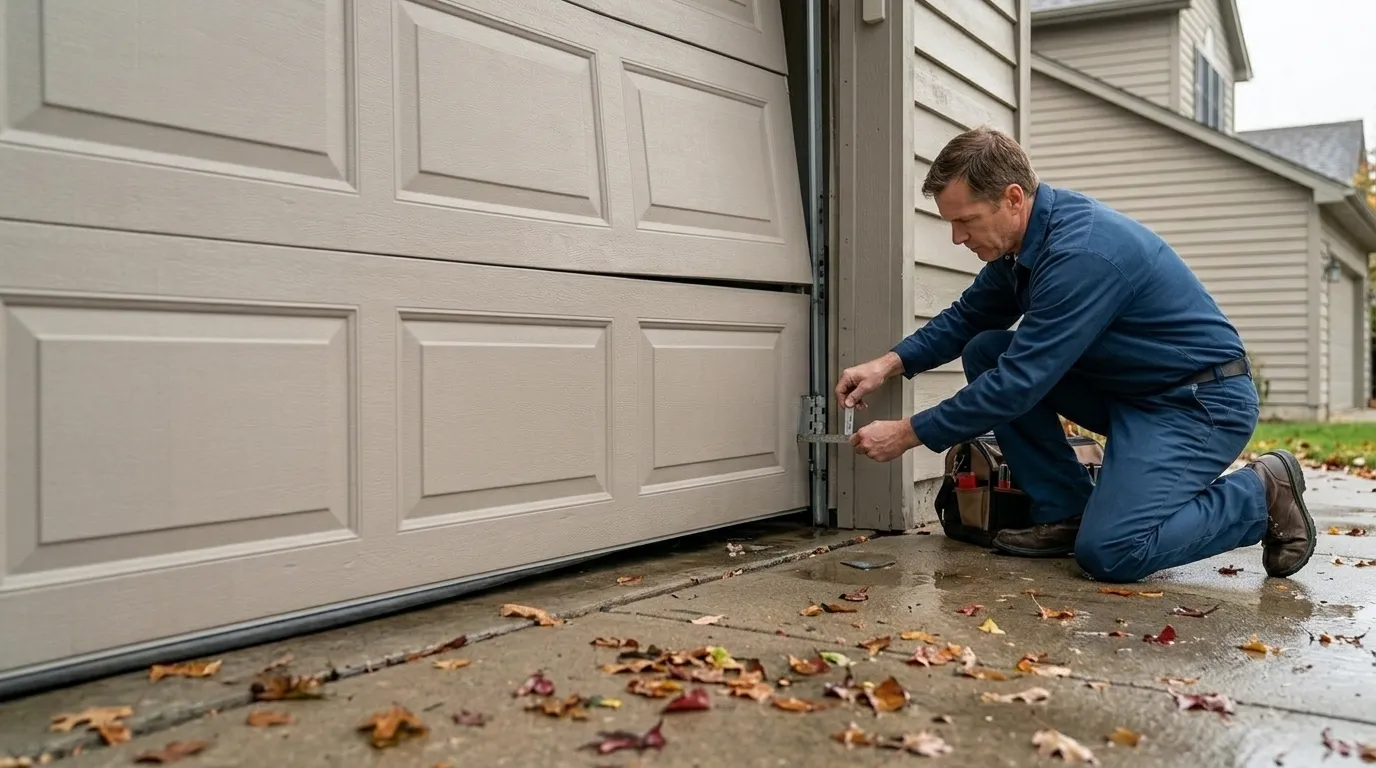
Garage Door Service
Tune-ups, lubrication, and safety checks that catch a small problem before it becomes a service call.
Learn more →Frequently Asked Questions
My door came off the track on one side only - is that worse than both sides?
Usually easier, actually. A one-side derail is almost always a bracket or track alignment issue on that side, which is a contained repair. A door off on both sides usually means a cable failure or a broken spring dropped it unevenly, which is a bigger job and not safe to touch yourself.
Can I just push the roller back into the track myself?
You can sometimes get it back in, but if a bracket is loose or a track section is bent, it'll pop out again on the next cycle, and you risk pulling the bracket further out of the frame or bending the track worse while forcing it.
Is this covered by tightening a few bolts, or is it a bigger repair?
Depends what we find. If it's just a loosened bracket, that's a quick fix. If the track itself is bent or the rollers are cracked from age, it's a parts job. We won't know which until we look at it.
Have a Door That Needs a Second Opinion?
Call and describe what it is doing - we will tell you what it likely is.